
 English
 Français
  Português
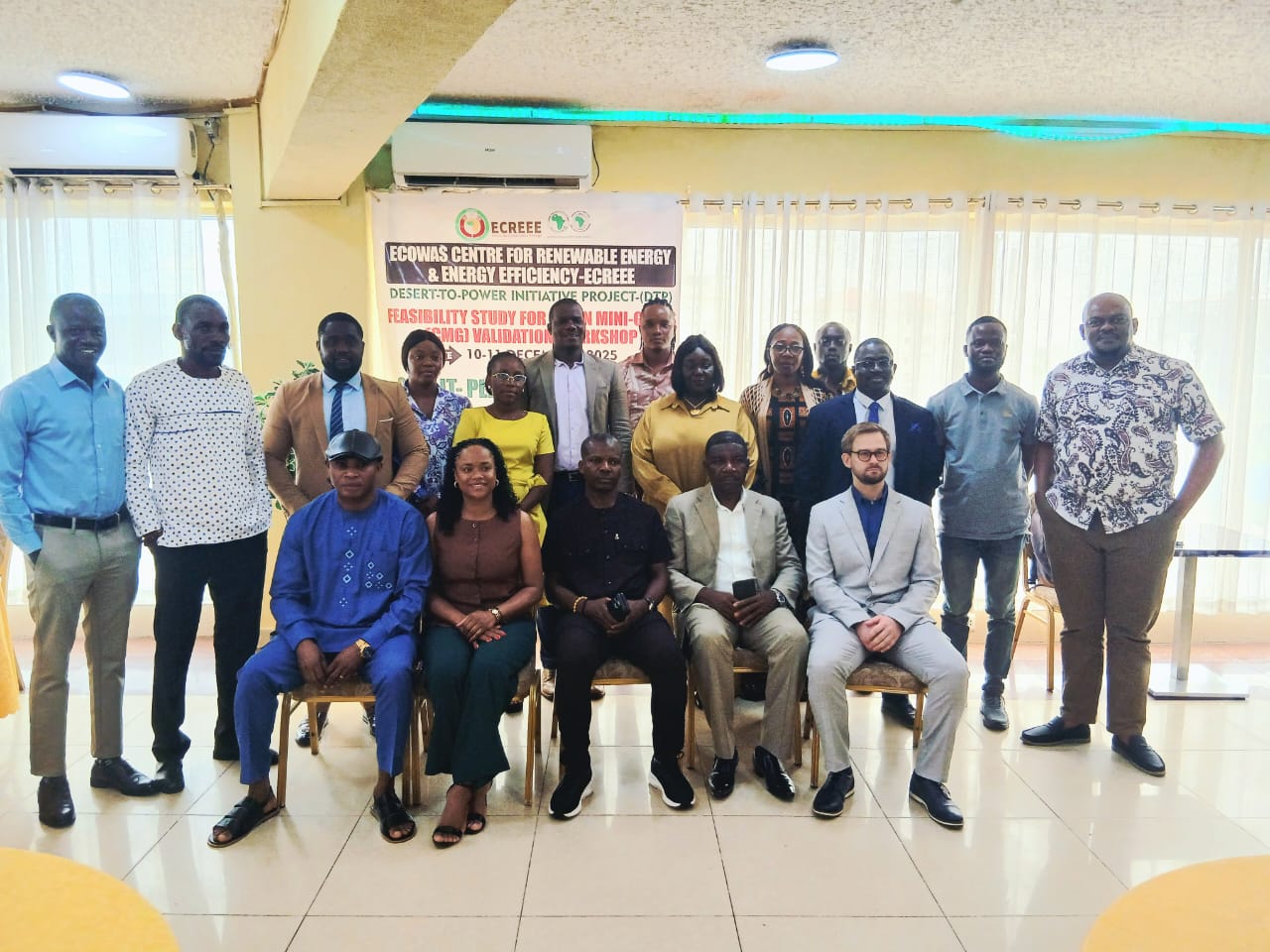
The ECOWAS Centre for Renewable Energy and Energy Efficiency (ECREEE), in partnership with the Ministry of Mines and Energy, conducted a two-day validation workshop in Monrovia to review the findings of the feasibility study for clean mini-grids (CMG) , under the Desert-to-Power West Africa Regional Energy Program (DtP-WAREP)-Phase 1 initiative, financed by the African Development Bank.
The study, conducted by the consortium INENSUS–NYETAA Group Consulting, identifies 30 rural localities in Liberia as viable for the development of solar PV mini-grids. The assessment covers energy demand, technical design, financial projections, environmental and social impacts, and gender-sensitive planning. The study will be used to mobilize funding for the construction of mini-grid systems in the selected communities. The validated and harmonized report and roadmap, will pave the way for investment in clean energy solutions for underserved communities across Liberia
The workshop gathered representatives from key national institutions, including RREA, EPA, the Ministries of Gender and Finance, LERC, the Liberia Standards Authority, alongside industry stakeholders, investors, and development partners. Opening the event, Assistant Minister for Energy Oliver S. Gbegbe reaffirmed the government’s commitment and noted the program’s alignment with the ARREST Agenda for inclusive national development. RREA Deputy Executive Director Stephen V. Potter Sr. welcomed the initiative, highlighting its role in expanding clean and reliable electricity to rural communities.
Speaking on behalf of ECREEE’s Executive Director, Mr. Emmanuel Etim, noted that the study aims to validate findings with national stakeholders and deploy a secure IT platform for CMG tendering and monitoring. He explained that the selected localities show strong potential for solar mini-grids based on grid distance, essential services, and economic activity, with expected benefits for health centers, schools, and rural businesses. Despite funding challenges, he expressed confidence that the first systems could be deployed within two to three years.